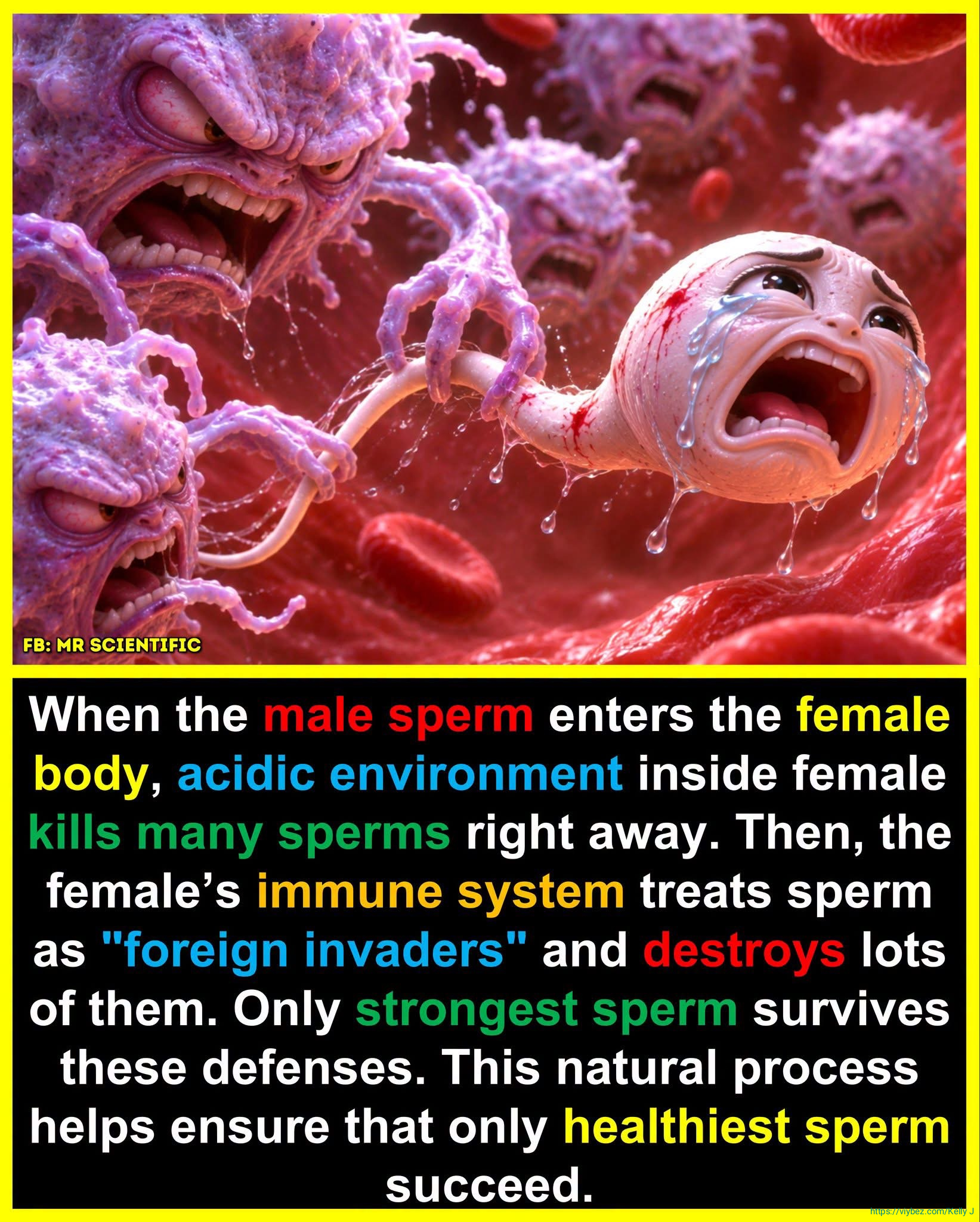

When sperm enters the female reproductive tract, it faces several biological obstacles before it can reach an egg.
The vagina is naturally acidic, with a typical pH of around 3.8–4.5.
This acidic environment helps protect against harmful bacteria and infections, but it also makes survival difficult for sperm cells, which function better in less acidic conditions.
The female reproductive system also has immune defenses that recognize and remove foreign cells, including sperm.
White blood cells, particularly neutrophils, can enter the reproductive tract and engulf sperm through a process called phagocytosis.
This immune response helps protect the body from potential infections, although it must be carefully regulated because sperm are also necessary for reproduction.
However, the immune system does not simply attack every sperm as an enemy.
Seminal fluid contains substances that temporarily modify the immune response and help sperm survive.
Those that move quickly into the cervix encounter more favourable conditions, while others are trapped in cervical mucus, flow back out or are removed by immune cells.
This journey acts as a natural selection process, favouring sperm with better movement and the ability to navigate the reproductive tract.