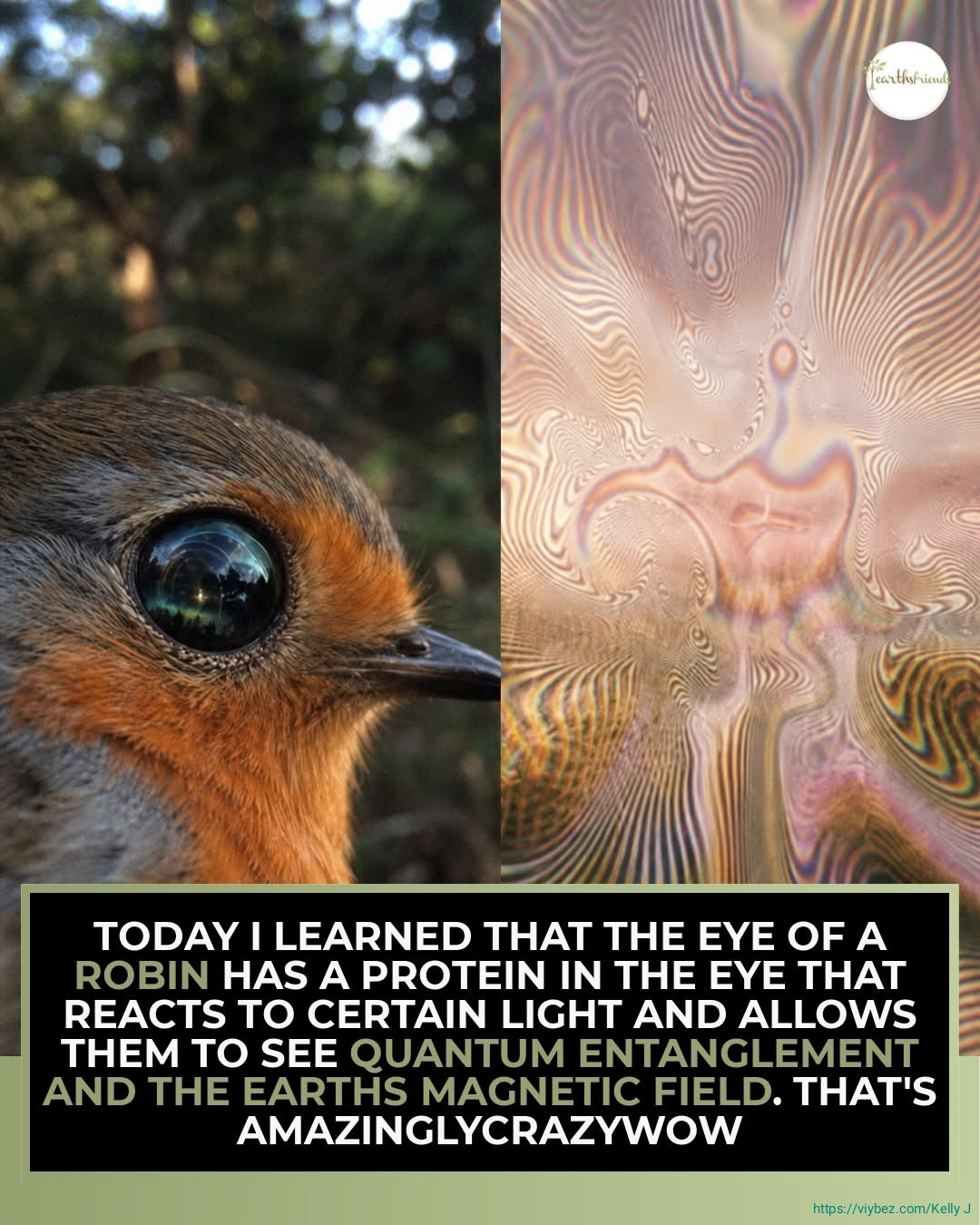

Robins have a protein in their eyes called cryptochrome 4 that reacts to blue light and Earth's magnetic field. When light hits the protein, it creates a pair of electrons whose chemistry shifts based on which direction the bird is facing—essentially giving the robin a built-in compass.
Klaus Schulten first proposed this idea in 1978, but the scientific community rejected it. Decades later, when researchers finally proved cryptochrome exists in animal eyes, Schulten said he "just fell off his chair."
In 2021, Jingjing Xu and Henrik Mouritsen's team in Oldenburg, working with Peter Hore's group at Oxford, confirmed the robin's version of the protein is magnetically sensitive. According to Mouritsen, the sensation might feel like "seeing where north is as kind of a shading on whatever else you would be seeing."
The weirdest part? The robins' compass stopped working inside wooden lab huts, scrambled by radio signals and nearby electronics. A grounded aluminum screen fixed it instantly. If researchers can prove the protein is truly the sensor, they'll have shown that birds navigate home using a fundamentally quantum mechanism.