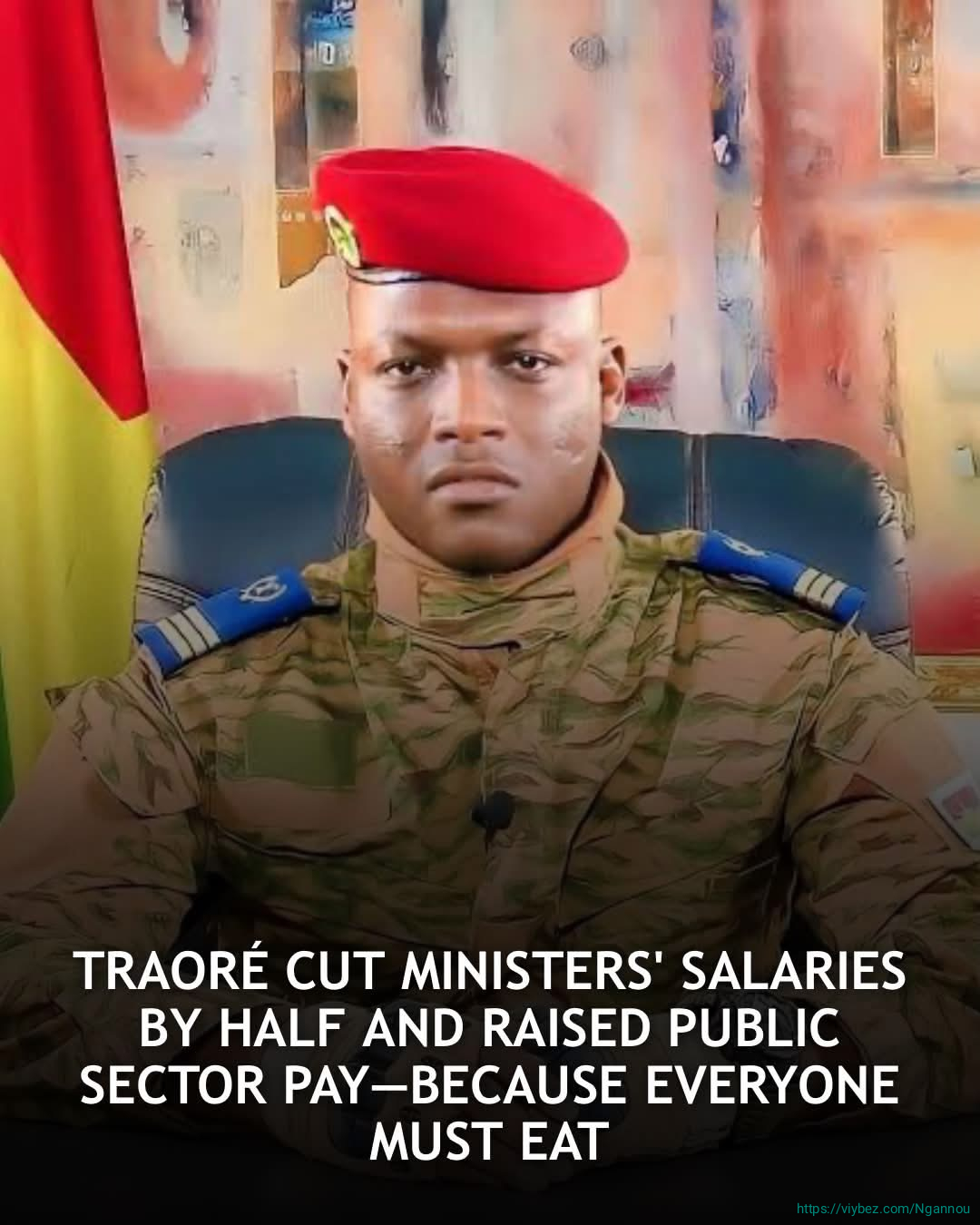

When Ibrahim Traoré took power, he looked at the gap between the people running Burkina Faso and the people living in it. Then he closed it.
In November 2022, his first Council of Ministers abolished the decree that had doubled the salaries of the president and ministers under his predecessor. That decree, signed in April 2022, had given the prime minister over 2.7 million FCFA a month and ministers around 2.3 million . Traoré scrapped it. The government returned to the 2008 salary scale, cutting ministers' pay by roughly half .
Then he did the part that matters. He took that money and put it where the people are.
The viral version of this story says he increased civil servants' salaries by 50 percent. That specific figure is not supported by the evidence. Fact-checkers from Fasocheck and FactSpace West Africa found no proof of a 50 percent raise . The claim is false.
But here is what he actually did, and it is more interesting than the myth.
In January 2026, Traoré announced a significant increase in public sector salaries across the board. The raise covered teachers, healthcare workers, police, soldiers, and civil servants—the people who keep the country running. The man who refused the presidential salary and kept his captain's pay decided that the people doing the work should be paid for it.
His logic was simple and he stated it plainly. Everyone must eat.
This is the Sankara playbook, updated for a new generation. In 1983, Thomas Sankara cut his own salary to $450 a month, sold the government's luxury cars, and told his ministers to live on what the people live on. Traoré is doing the same thing. He reduced the cost of government by cutting the top. Then he redirected the savings to the bottom.
The ministers earn less than they did before he took power. The civil servants earn more. The president earns a captain's wage. And the message is unmistakable: power is not a salary. Power is a responsibility.
#BurkinaFaso