
The year is 1983, the month is November, and Kenya had just come from snap elections held two months earlier, which Moi was using to try to stabilise his government after the 1982 coup attempt.
Life was slowly returning to normal, although political bumps were still visible. Leaders were claiming to have been rigged out, new political names were making headlines, and there was talk here and there about the formation of a new Cabinet.
In the small town of Sagana, along the Nairobi-Nyeri highway, one of East Africa's biggest bands was scheduled to perform. Since it would be their first time in Sagana, expectations were very high.
As was the norm then, a band would send a team to assess the venue before the date of the show, mainly to ensure that it was safe and convenient for both the audience and the band.
Two members of the band therefore travelled to Sagana, the band leader and another member. Together with the promoter, they assessed the venue before deciding to have some refreshments.
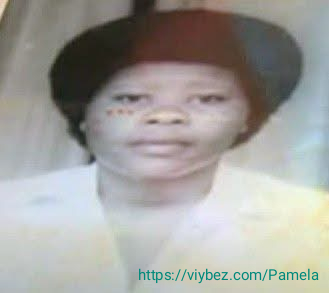
After the refreshments, their bill was brought by a 19 year old beautiful Kikuyu lady with an afro hairstyle, brown complexioned, natural beauty, an infectious smile and a graceful walking style.
Her name was Margaret Wambui Mwangi. The band leader did not hesitate to express his admiration for her and promised to personally look for her whenever he returned to Sagana for their performance.
True to his word, they met again and began a relationship that was on and off for several reasons. Among them was the fact that the guy already had other women.
Another reason was that when Wambui told her father, Mzee Mwangi Wa Buri, about the relationship, he strongly opposed it.
According to Mzee Mwangi, during an interview with NTV in 2019, he understood the kind of life musicians lived and knew it would not be easy for his daughter. He therefore chose to help her make what he believed was the right decision, especially because she was still young.
This is the story behind the song "Afro" by Les Wanyika, composed by John Ngereza and recorded in 1986. It was a real-life story based on the relationship between John Ngereza and Margaret Wambui, popularly known as Afro Mtoto wa Sagana.
Ngereza nicknamed Wambui "Afro" because of her hairstyle.
Ngereza and Wambui would later be blessed with a child, John Ngereza Junior, although they never got married. Another version has it that they had two children together, Esther and John Ngereza Junior, although no proper verification links Esther's paternity to John.
The revelation in the first verse of the song suggests that John Ngereza wrote it at a time when the two were no longer together and, most probably, he did not know where Wambui was. He was literally crying for a love that was slowly fading, while still holding on to the hope that it could be revived.
In his interview with NTV, Wambui's father said the song was released while she was still at home, although Ngereza had already informed her that he had written a song for her.
The first verse goes:-
"Afro, Afro mama oh oh
Mtoto wa Sagana eeh mama
Salamu zangu nakutumia popote ulipo uzipokee
Salimia ndugu na wazazi wako mama eeh popote walipo, Afro
Mimi sijambo lakini mawazo tele moyoni nina wasiwasi, mmh
Nikikumbuka tulivyowachana mara ya mwisho uliniahidi, Afro
Tungeonana mapema siku zinapita bibi eeh mbona sikuoni, mama.."
The instrumentation in the song is uniquely creative and powerful, becoming richer and more captivating as the music rises towards its climax. The vocal harmony and seamless synchronization with the instruments clearly demonstrate the musical expertise of the legendary group.
The climax is particularly remarkable, with carefully crafted lyrics whose message is not only timeless but remains deeply relevant to lovers seeking to express affection and win back a love that is slowly fading.
"Afro wa Kirinyaga, Sagana eeh, eeh
Usiniweke pembeni mama, aah
Ingawa wako wengi wazuri, mami
Lakini nimekuchagua wewe, eeh
Tabia zako sawa na sura yako,
Nimeridhika kuwa na wewe, eeh
Sagana unipeleke mama, ooh
Nikawaone wazazi wako mama
Na TZ pia tufike mami
Ukawaone baba na mama, eeh
Mengine mengi sisemi mama, aah
Uamuzi nakuwachia wewe, eeh
Mwisho nakuombea salama, Afro
Mpaka siku tutapoonana,"
Ngereza died on February 11, 2000, leaving behind a remarkable legacy as one of the finest composers, guitarists and vocalists in the history of 20th-century Swahili Rhumba.
Photo: Margaret Wambui, aka Afro Mtoto Wa Sagana.