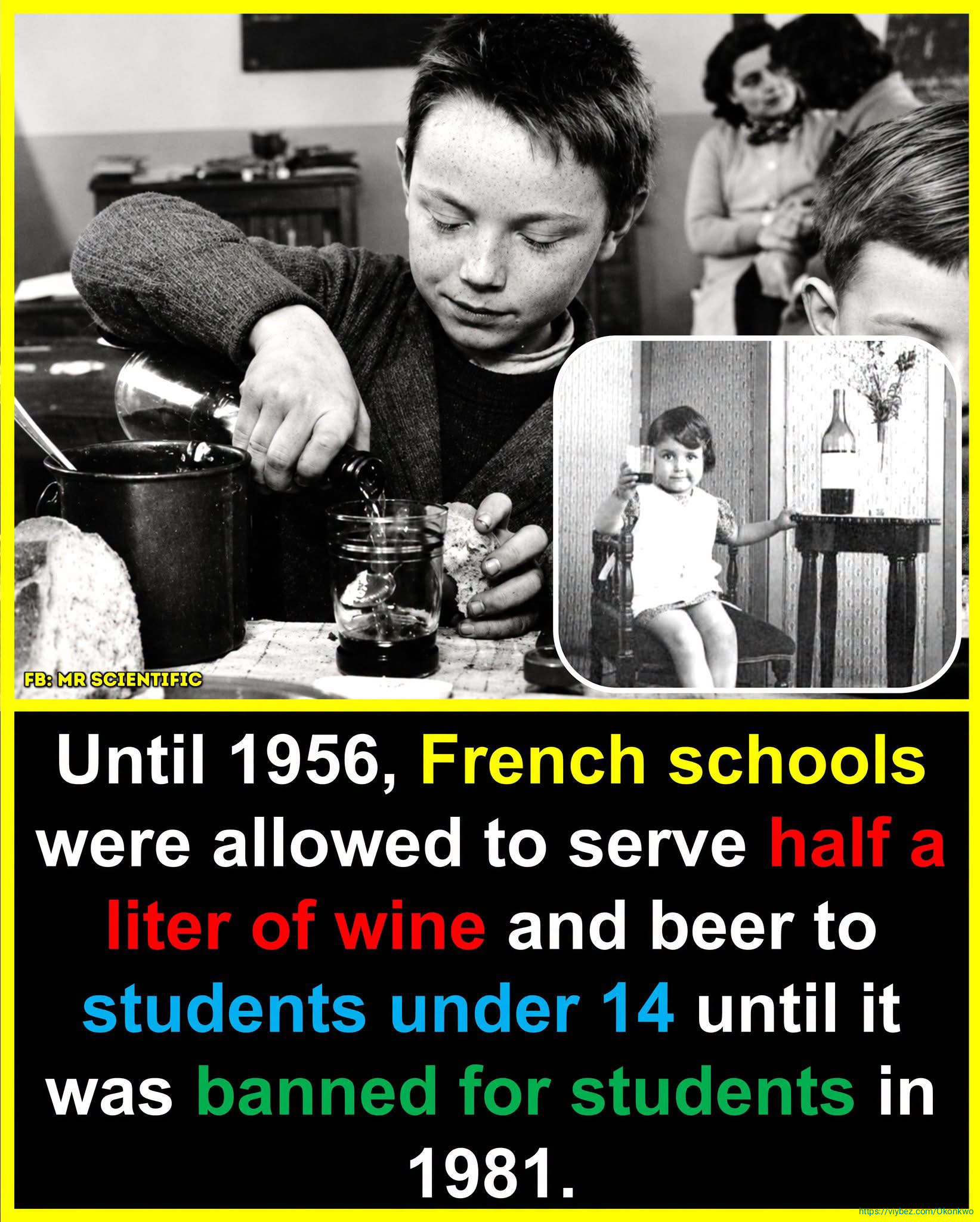

For much of the 19th and early 20th centuries, wine was commonly served in French schools, orphanages, and cafeterias because many people believed it was safer than untreated water and could provide calories for growing children.
France had one of the highest per-capita wine consumption rates in the world, and diluted wine with meals was often considered normal even for young people.
In 1956, the French government officially prohibited the serving of alcoholic beverages to children under 14 in schools.
However, older students could still receive low-alcohol drinks such as wine, cider, or beer with meals under certain regulations. The policy reflected changing medical knowledge about alcohol and growing concerns about public health.
The practice continued to be gradually restricted over the following decades.
In 1981, Education Minister Alain Savary banned alcoholic beverages from French schools for all students, regardless of age. This marked the end of a tradition that had existed in various forms for generations.